

TL;DR
- This guide explains how to bathe a newborn safely at home, step by step.
- Ideal for pregnant moms and first-time parents preparing for baby’s first bath.
- Focuses on safety, comfort, and confidence during early bath times.
- Covers what you need, when to bathe, and how to hold your baby securely.
- Shows how the Shnuggle Baby Bath can help support newborns during bathing.
Introduction
Bringing your baby home comes with many firsts, and bath time is often one of the most nerve-wracking. If you’re wondering how to bathe a newborn safely at home, you’re not alone. Many parents worry about slippery skin, keeping baby warm, and doing everything “right.”
The good news is that newborn baths don’t have to be complicated. With a calm approach, a few simple steps, and the right support, bath time can become a gentle and reassuring routine for both you and your baby.
When Should You Give Your Baby Their First Bath?
In the early days, newborns don’t need daily baths. Two or three times a week is usually enough.
Until the umbilical cord stump falls off, many parents begin with gentle sponge baths. Once your baby is ready for a tub bath, keeping things short and warm helps them feel secure.
What You’ll Need Before You Start
Having everything within reach makes bath time feel much more manageable.
- A small baby bath or bath support
- Warm (not hot) water
- Mild, baby-friendly cleanser
- A soft washcloth
- A warm towel for drying
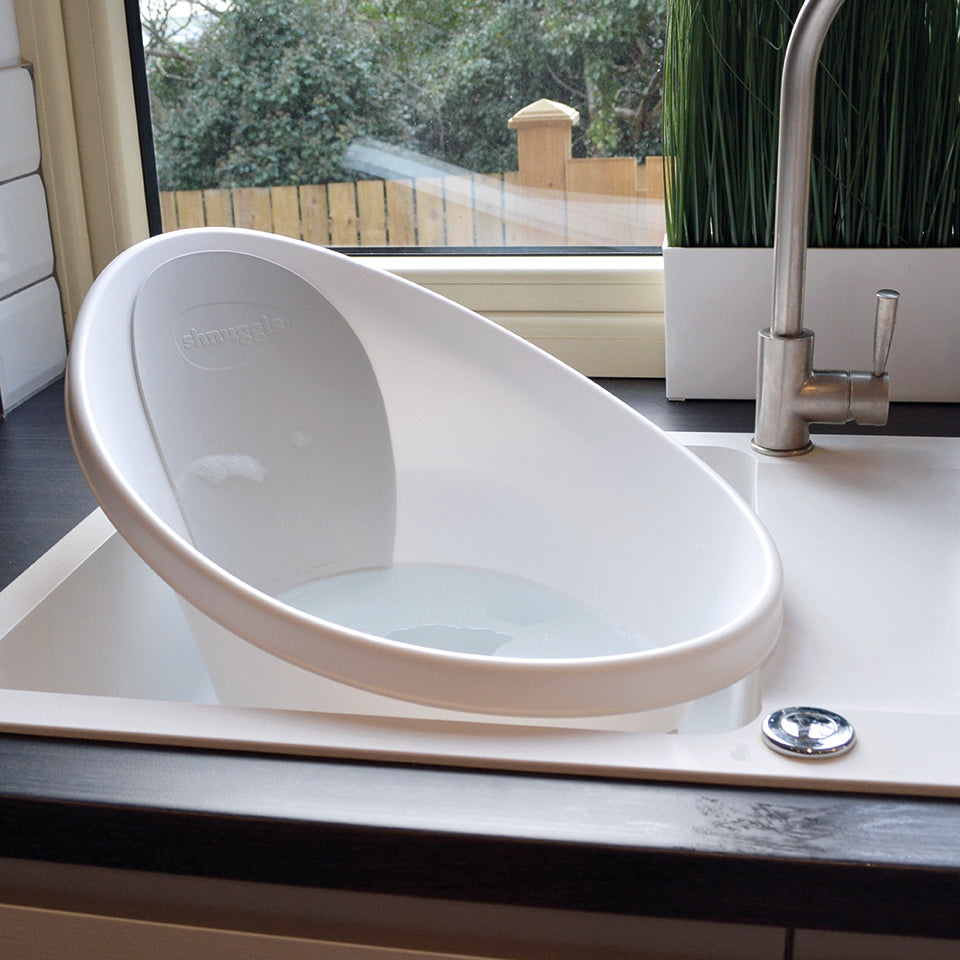
Using a newborn-specific bath can make a big difference. The Shnuggle Baby Bath is designed with a supportive bum bump that helps keep your baby from sliding, allowing you to focus on gentle washing rather than gripping tightly.
Step-by-Step: How to Bathe a Newborn Safely at Home
1. Fill the Bath and Test the Water
Use just a few inches of warm water. It should feel comfortably warm to your wrist or elbow, never hot.
2. Undress Baby Slowly
Keep your baby wrapped in a towel and uncover only the areas you’re washing. This helps them stay warm and calm.
3. Support Baby Securely
Gently lower your baby into the bath feet first. A bath with built-in support, such as the bum bump in the Shnuggle Baby Bath, helps keep baby upright and reduces slipping during bath time.
4. Wash Gently
Use a soft cloth to clean from top to bottom. There’s no rush. Talk softly or sing if it helps your baby relax.
5. Keep Bath Time Short
Five to ten minutes is more than enough for newborns. Short baths help prevent chills and overstimulation.
6. Dry and Dress Right Away
Wrap your baby in a warm towel, pat dry gently, and move on to dressing or feeding.
Why Support Matters During Newborn Bath Time
Newborns have very little muscle control, which is why slipping is such a common concern for parents. A baby bath designed with safety in mind can ease that worry.
The Shnuggle Baby Bath offers a snug, upright position with its bum bump feature, helping your baby stay in place while leaving your hands free to wash and comfort them. This added stability can make a meaningful difference during those first few baths at home.
Building Confidence One Bath at a Time
Learning how to bathe a newborn safely at home takes practice, and it’s completely normal to feel unsure at first. Each bath helps you understand your baby’s cues and what makes them most comfortable.
Keeping things simple, moving slowly, and choosing supportive tools can turn bath time into a calm bonding moment rather than a stressful task. Trust yourself—you’re doing something new, and you’re doing it thoughtfully.
Share:
How to Make Baby Bath Time Calm and Stress-Free for You and Your Newborn
How Often Should You Bathe a Newborn? Gentle Baby Bath Tips for First-Time Parents