

TLDR:
- Most babies use a bassinet for the first 4–6 months.
- Bassinets keep newborns close and supported during early sleep.
- A bedside bassinet can make nighttime feeds and settling easier.
- Safe sleep guidelines focus on a firm mattress and clear sleep space.
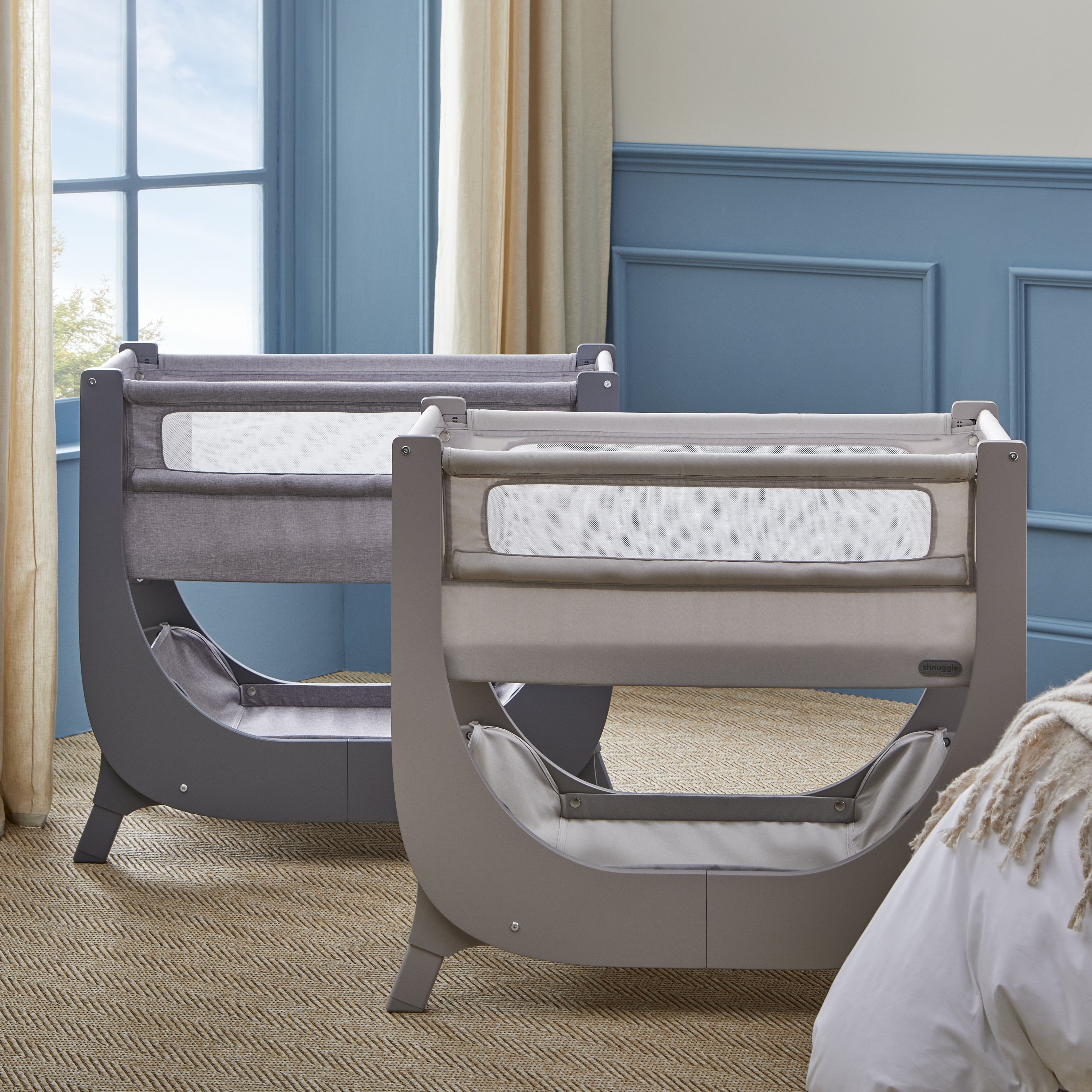
- The Shnuggle Air Lite Bedside Bassinet offers breathable mesh sides for better airflow.
Introduction
One of the most common early questions for new parents is how long a newborn should sleep in a bassinet. Those first weeks are filled with night wakings, feeding, and learning what helps your baby settle. A bassinet can feel like a comforting in-between step—small, cozy, and close to you—while you both adjust to newborn sleep patterns.
How Long Should a Newborn Sleep in a Bassinet?
Most newborns sleep in a bassinet from birth until around 4 to 6 months. This timeframe often depends on your baby’s size, development, and movement. Once babies begin rolling, pushing up, or outgrowing the bassinet’s weight or height limits, it’s usually time to transition. The goal is always a safe, comfortable sleep space that suits your baby’s stage.
Why Many Parents Choose a Bedside Bassinet
In the early months, having your baby nearby can make nights feel more manageable. A bedside bassinet allows you to check on your baby, respond to cues, and handle night feeds without fully getting out of bed. This closeness can feel especially reassuring for first-time parents.
The Shnuggle Air Lite Bedside Bassinet is designed to sit beside your bed, keeping your baby close while still offering them their own sleep space.
Safe Sleep and Breathable Design
Safe sleep is about simplicity. A firm mattress, an uncluttered sleep area, and good airflow all play a role. Breathable mesh sides can help improve airflow around your baby, offering added peace of mind while you sleep.
The mesh panels on the Shnuggle Air Lite Bedside Bassinet are designed with visibility and airflow in mind, helping parents feel more connected and aware during the night.
When Is It Time to Move On?
You may notice signs that your baby is ready to move from a bassinet to a larger sleep space. These can include increased movement, reaching weight limits, or simply needing more room to stretch. Transitioning is a normal part of your baby’s growth and doesn’t need to be rushed.
Closing Thoughts
If you’ve been asking how long a newborn should sleep in a bassinet, remember there’s no single perfect moment. What matters most is creating a calm, safe sleep environment that works for your family.
You’re learning your baby’s rhythms day by day. Choosing thoughtful sleep solutions can help those early nights feel a little more settled, while giving you the confidence that you’re supporting your baby’s comfort and safety.
Share:
How Often Should You Bathe a Newborn? Gentle Baby Bath Tips for First-Time Parents
Changing Pad vs Changing Mat